Sunday, January 15, 2012
Tatooes or what?
Here's a slightly unsettling video. Zombie man going back and forth between looking normal and looking absolute tattooed freak. At some point (1:25 or so) things start to blend - that's where it gets interesting.

Friday, January 13, 2012
When I'm 80 we'll all be old
I'm preparing for a stint as a moderator at a conference about the future of health care, arranged by the Danish Engineering society. It's amazing to read just how dramatic the aging of the Danish population will be, in our own life time.
With some luck, I'll be 80 years old in 2041. By then, 8% of the Danish population will be 80 or above. Today the figure is only 4%.
19% of the population will be above 70 years in 2040.
Another stat: By 2020 - in less than 10 years - there will be 2 million Danes with chronic diseases - out of a total population of 5,5 mio.
Source: IDA og Det Nationale forskningscenter for Velfærd.
With some luck, I'll be 80 years old in 2041. By then, 8% of the Danish population will be 80 or above. Today the figure is only 4%.
19% of the population will be above 70 years in 2040.
Another stat: By 2020 - in less than 10 years - there will be 2 million Danes with chronic diseases - out of a total population of 5,5 mio.
Source: IDA og Det Nationale forskningscenter for Velfærd.
Thursday, January 12, 2012
Very cool invention - a fridge made of clay

The Miticool fridge is a wonderful example of creating frugal solutions that are both cheap and which fit local conditions very well. The fridge is made of clay and it is kept cool by water which drips down the side from an upper chamber and evaporates.
No electricity needed, no maintenance. No Noise.
And very different from what a Western company would come up with.

Tuesday, January 10, 2012
School of one - sounds amazing
Anyone interested in how to improve the efficiency of schools is likely to be fascinated by the School of one concept - an experimental program used in New York City. The program is based on targeting online exercises and instruction to students based on their moods and style of learning - using algorithms that are similar to those used to personalize music on internet services like Pandora.
It's presented in this episode of Freakonomics radio. Maybe the presenters gloss things over a bit, but it does sound like School of one is on to something.
It's presented in this episode of Freakonomics radio. Maybe the presenters gloss things over a bit, but it does sound like School of one is on to something.
Where Apples come from (is not a pretty place)
An excellent, thought provoking and very different podcast piece: Mike Daisey, an American stand up storyteller and Apple fan goes to Shenzhen in China to understand where those beautiful machines are made. It’s simply a guy telling a story of what the city looks like, what the workers told him, what the factory floors and cramped dormitories and endless hours are like, how workers are crippled by repetitive motions and toxic chemicals… Very bleak, very stirring to hear about – and remarkably, even entertaining to listen to.
I can certainly recognize his description of Shenzhen and the particular harsh and repressive side of Chinese culture that you see such places.
Mike Daisey may be a bit colorful, and certainly his mission is not to try to give a balanced view. It’s emotional, but the producers of the radio show, which aired his report – This American Life – have tried to fact check everything he told. In the second half of the program they talk to experts and rattle off regular journalistic data that largely supports the first story.
It takes an hour to listen - it's very well spent.
Sunday, January 08, 2012
Ipencil - the complexity of a making a simple pencil
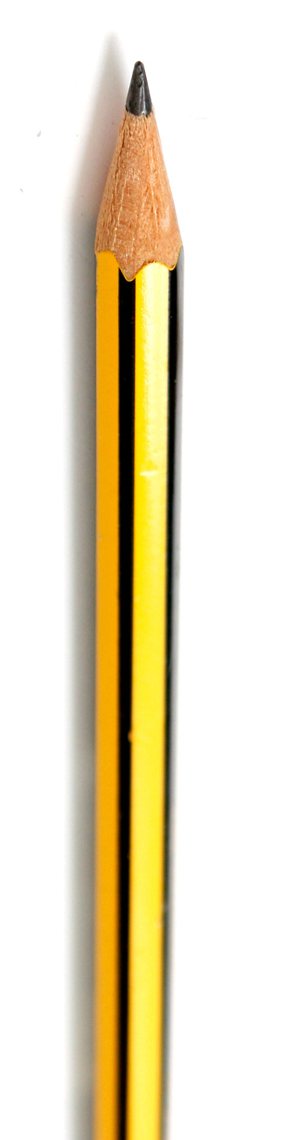
I stumbled upon a very interesting, classic essay: "I, Pencil: My Family Tree". The author, Leonard E- Read, traces the many steps that are necessary for manufacturing a pencil: Cutting wood, producing the saws to cut the wood, cooking the coffee to warm the loggers, mining the graphite, processing it, producing the lacquer, the label, the eraser and the metal holder of the rubber. It goes on and on - the point of course being to demonstrate how incredibly widely connected and interdependent an industrial process is.
As Read puts it: Simple? Yet, not a single person on the face of this earth knows how to make a pencil. It takes the cooperation and skills of thousands and thousands.
The essay was first published in 1958, and since then the complexity has reached a whole different level. Think of an I-phone compared to a pencil. The phone is useless without being in ongoing connection to a network of communication, software, songs, news feeds - all of that. It's useless without regular charging from the electricity grid. Its value resides both in what producers have created, and in content created by the users that are connected through it. Read ends his essay arguing that the fact that so many people can come together without detailed instructions to make such a complex happen shows that we must leave men as free as possible to let the invisible hand work its magic. I would draw a different conclusion: The interconnection of everything and everybody is perhaps the most important trend shaping our future. it proves that we are increasingly interdependent. Our fate is common, we have shared interests. We should think less in terms of local, individual and short term gain - and more according to a planetary community. You could write a whole book about it - in fact, I did.
Friday, January 06, 2012
AsiaNBC i Deadline på DR-TV

Jeg var en tur i Deadline på DR-TV igår for at præsentere Universefondens AsiaNBC projekt.
Indslaget ligger her.
(forneden i rammen kan du klikke dig direkte hen til interviewet: det er den fjerde hvide pind):
Wednesday, January 04, 2012
AsiaNBC website is online and kicking

For the past couple of years I have coordinated the Asia New Business Creation project at the Universe Foundation. We have compared companies in Denmark, China, Singapore and Korea and their approaches to innovation and business development. The differences should be an inspiration and a challenge to any Western company concerned with their place on the markets of the future.
You can read all about the conclusions - and a lot about Asian business in general - at the new website.
You can also download the booklet which summarizes the findings - right here.
Tuesday, January 03, 2012
An upgraded tuk-tuk
Bajaj, the Indian maker of the three-wheeler "tuk-tuk" that is ubiquitous in India and other developing countries has launched an upgraded version - a "four-wheeler".
Top speed 70 km/hour, 35 km. pr. liter.
We'll see if it fares better than the Tata Nano, which for all of its surrounding hype still lacks sales.
Top speed 70 km/hour, 35 km. pr. liter.
We'll see if it fares better than the Tata Nano, which for all of its surrounding hype still lacks sales.
Same words, different meanings
Fascinating, how many of the core words that define our culture have very different meanings, depending on who you are.
We use words like growth, quality, community, democracy and creativity to describe our aspirations, but we hear different meanings behind the concepts.
You can describe very different realities with the exact same words.
Monday, January 02, 2012
Shanghai: Fast forward, large scale

The Atlantic brought two photos of the Bund and Pudong in Shanghai - one shot in 1990, the second shot in 2010. A very clear illustration of large scale change.
Sunday, January 01, 2012
HERE I AM, HERE I AM

An Abu Dhabi sheik has written his name in the sand of an island he owns - in letters that are two miles wide. This makes them plainly readable in Google Earth. As you can see on Google Earth, the letters were created by digging canals in the dessert and pumping them full of water.
Very creative way of spending your money.
Tuesday, December 29, 2009
Giddens on a new kind of growth
Just stumbled on this piece written by Anthony Giddens in Huffington post as part of the launch of his new book on the politics of climate change:
"Jobs will be created not so much through renewable technologies themselves as through the lifestyle changes that coping with climate change and energy security will bring about. Sensibilities will change and with them tastes. The new economy that will emerge will be even more radically post-industrial than the one we have now. It will be up to entrepreneurs to spot the economic opportunities that will come about with expansion -- much in the same way as ways were found to revitalize dockland areas where shipping industry has evaporated away.
Pondering what form recovery from recession should take should cause us to think seriously about the nature of economic growth itself, at least in the rich countries. It has been known for a long while that, above a certain level of prosperity, growth does not necessarily lead to greater personal and social welfare. Now is the time to introduce more rounded measures of welfare alongside GDP and give them real political resonance. Now is the time for a sustained and positive critique of consumerism that can be made to count politically. Now is the time to work out how to ensure that recovery does not mean a reversion to the loads-of-money society.
The period of Thatcherite deregulation is over. The state is back. We will need active industrial policy and planning, in respect to economic institutions but for climate change and energy policy as well".
"Jobs will be created not so much through renewable technologies themselves as through the lifestyle changes that coping with climate change and energy security will bring about. Sensibilities will change and with them tastes. The new economy that will emerge will be even more radically post-industrial than the one we have now. It will be up to entrepreneurs to spot the economic opportunities that will come about with expansion -- much in the same way as ways were found to revitalize dockland areas where shipping industry has evaporated away.
Pondering what form recovery from recession should take should cause us to think seriously about the nature of economic growth itself, at least in the rich countries. It has been known for a long while that, above a certain level of prosperity, growth does not necessarily lead to greater personal and social welfare. Now is the time to introduce more rounded measures of welfare alongside GDP and give them real political resonance. Now is the time for a sustained and positive critique of consumerism that can be made to count politically. Now is the time to work out how to ensure that recovery does not mean a reversion to the loads-of-money society.
The period of Thatcherite deregulation is over. The state is back. We will need active industrial policy and planning, in respect to economic institutions but for climate change and energy policy as well".
Thursday, November 12, 2009
President who?
It seems telling that the first president of the European Union is likely to be someone I've never heard of.
Monday, March 30, 2009
De første 3 kapitler af min bog er nu online (!)
Sorry, this is in Danish to announce that the drafts of the first 3 chapters of my book in progress are now online.
Det er skitser, som det vil fremgå. De hænger sammen, men det er første vrid, så det er stadig lidt råt.
De kan læses her
Det er skitser, som det vil fremgå. De hænger sammen, men det er første vrid, så det er stadig lidt råt.
De kan læses her
No wonder things are tight
No wonder things are tight, if everybody cuts spending and redouble their sales efforts
Wednesday, March 04, 2009

Tuesday, February 17, 2009
Microsoft's Craig Mundie on managing privacy
Among the sessions at this years Davos meeting of the World Economic Forum was a panel on "The new digital experience". Interesting stuff. In particular I think Craig Mundie of Microsoft has a very succinct description of the real issue regarding managing privacy:
"The technology will result in us collecting and remembering a huge amount of data, and over time we will ultimately find beneficial ways of using this. People can certainly speculate that there are evil ways to use and exploit data, and the question I think will become: how can we find a manageable way for people to declare their intent about each class of data and each class of service that they subscribe to?
And to the extent that we can get that agreed on and that becomes platformized, so you’re not facing a hundred different ways to express that intent, then I think these issues will come under control.
There are definite business tensions, because it’s easy to build certain business models that presume that you have almost surreptitious collection of information – and of course government intelligence business, that’s what they do for a living.
So at some level you have to realize the world is going to be a sea of data, and the real question related to privacy is going to be, how does the user get to specify what they think their ownership rights are in that data - no matter who collected it.
And I think these are questions that are not clear in the law and in the policy and that’s really gotta be the focus of the discussion. "
Here is the link to the podcast
"The technology will result in us collecting and remembering a huge amount of data, and over time we will ultimately find beneficial ways of using this. People can certainly speculate that there are evil ways to use and exploit data, and the question I think will become: how can we find a manageable way for people to declare their intent about each class of data and each class of service that they subscribe to?
And to the extent that we can get that agreed on and that becomes platformized, so you’re not facing a hundred different ways to express that intent, then I think these issues will come under control.
There are definite business tensions, because it’s easy to build certain business models that presume that you have almost surreptitious collection of information – and of course government intelligence business, that’s what they do for a living.
So at some level you have to realize the world is going to be a sea of data, and the real question related to privacy is going to be, how does the user get to specify what they think their ownership rights are in that data - no matter who collected it.
And I think these are questions that are not clear in the law and in the policy and that’s really gotta be the focus of the discussion. "
Here is the link to the podcast
Sunday, January 18, 2009
Don't copy Lessig

A little observation: Lawrence Lessigs latest book "Remix" is not creative commons licensed.
Tuesday, January 13, 2009
Fast Company names Danfoss Universe "architectural wonder"

Fast Company magazine has named the Cumulus exhibition building at Danfoss Universe one of ten "architectural wonders of the world" in 2008. I guess that proves that you can make a mark globally, even in Nordborg, Denmark.
Sunday, January 04, 2009
(Lots of) Keywords for my book
My original intention was to write this coming book in English, but thinking closer through the practical issues I've decided to start out in Danish, and then hopefully it will be such a massive hit that the English will kinda happen automatically...
So at moment the script is a weird mix of Danish and English. The "skeleton" of the book; my list of all the headlines for paragraphs, is still mostly in English - and I've posted it here.
I've also written a 5-page abstract. The Danish version is here. The English version is here, or you can read on this blog a few postings back.
So at moment the script is a weird mix of Danish and English. The "skeleton" of the book; my list of all the headlines for paragraphs, is still mostly in English - and I've posted it here.
I've also written a 5-page abstract. The Danish version is here. The English version is here, or you can read on this blog a few postings back.
Sunday, December 28, 2008
The trajectory of information
The way things are going:
Our information will be
- hi-res
- real time
- connected
- stored
- searchable
Our information will be
- hi-res
- real time
- connected
- stored
- searchable
Wednesday, December 03, 2008
Konference: Energiløsninger til klimarigtigt byggeri
Her er en invitation til en lille konference jeg er igang med at arrangere:
Danfoss Ventures afholder i samarbejde med DONG, TS build UP og Project Zero en mini-konference om
Energiforsyning til klimarigtigt byggeri
på Alsion, Syddansk Universitet i Sønderborg,
mandag den 12. januar, kl. 10.30 - 16.30.
Alt tyder på at kravene om energi-effektivitet i bygninger vil skærpes markant i de kommende år. Med 150 dollars pr. tønde olie, fik vi for nylig en forsmag på hvor voldsomt energipriserne kan stige. Den globale efterspørgsel efter energi vil næsten uvægerligt presse priserne i vejret fremover - dertil kommer udsigten til Co2 kvoter og Co2 afgifter, og en stramning af lovgivningen omkring energi-effektivitet. Der er brug for væsentligt forbedrede energiløsninger i byggeriet, både indenfor nybyg og renovering.
Samtidig betyder finanskrisen, at netop bæredygtige og energirigtige løsninger kan vise sig som et af de få vækstmarkeder indenfor en ellers temmelig truet byggeindustri.
Ved konferencen vil en perlerække af førende danske firmaer fortælle om arbejdet med at udvikle nye, gennemtænkte og banebrydende løsninger på energiforsyningen i bygninger.
Nok så vigtigt er dagen også en mulighed for at udveksle faglige erfaringer og vurderinger, og en lejlighed til at knytte nye kontakter på tværs af brancher.
Blandt dagens indlæg er:
• Peter Hesseldahl, Impact by Danfoss, ridser baggrunden for dagens tema op og styrer dagens debatter
• Anna Kathrine Bisgaard og Lars Kvist, Arkitema, taler om ”Energi til mennesker – holistisk arkitektur”
• Rie Oehlenschläger, arkitekt, taler om passiv huse og bæredygtig byplanlægning
• Tim Mondorf, IBM, fortæller om Smart grids
• Danfoss fortæller om udviklingen af mikrokraftvarme-anlæg baseret på brændselsceller
• Anders Dyrelund, Rambøll, fortæller om Varmeplan Danmark
• Velux fortæller om arbejdet med model home 2020
• Carl Bro/Grontmij præsenterer SIB Zero+ huset, og fortæller om Re-think city konceptet, der medtænker brint i energiforsyningen
• Teknologisk Institut præsenterer deres Energyflexhouse-koncept
• Henrik Sørensen, fra Esbensen Consulting, vil tale om Integreret energidesign – når byggeri ses i en helhed.
Deltagelse koster 890 kr. ex. moms, inkl. frokost og forfriskninger i pauserne.
Tilmelding senest 5. januar til Dorthe M. Lyngsø på dorthe@tsbu.dk
Nærmere oplysning og detaljeret program på: www.danfossuniverse.com/energiogklima
Danfoss Ventures afholder i samarbejde med DONG, TS build UP og Project Zero en mini-konference om
Energiforsyning til klimarigtigt byggeri
på Alsion, Syddansk Universitet i Sønderborg,
mandag den 12. januar, kl. 10.30 - 16.30.
Alt tyder på at kravene om energi-effektivitet i bygninger vil skærpes markant i de kommende år. Med 150 dollars pr. tønde olie, fik vi for nylig en forsmag på hvor voldsomt energipriserne kan stige. Den globale efterspørgsel efter energi vil næsten uvægerligt presse priserne i vejret fremover - dertil kommer udsigten til Co2 kvoter og Co2 afgifter, og en stramning af lovgivningen omkring energi-effektivitet. Der er brug for væsentligt forbedrede energiløsninger i byggeriet, både indenfor nybyg og renovering.
Samtidig betyder finanskrisen, at netop bæredygtige og energirigtige løsninger kan vise sig som et af de få vækstmarkeder indenfor en ellers temmelig truet byggeindustri.
Ved konferencen vil en perlerække af førende danske firmaer fortælle om arbejdet med at udvikle nye, gennemtænkte og banebrydende løsninger på energiforsyningen i bygninger.
Nok så vigtigt er dagen også en mulighed for at udveksle faglige erfaringer og vurderinger, og en lejlighed til at knytte nye kontakter på tværs af brancher.
Blandt dagens indlæg er:
• Peter Hesseldahl, Impact by Danfoss, ridser baggrunden for dagens tema op og styrer dagens debatter
• Anna Kathrine Bisgaard og Lars Kvist, Arkitema, taler om ”Energi til mennesker – holistisk arkitektur”
• Rie Oehlenschläger, arkitekt, taler om passiv huse og bæredygtig byplanlægning
• Tim Mondorf, IBM, fortæller om Smart grids
• Danfoss fortæller om udviklingen af mikrokraftvarme-anlæg baseret på brændselsceller
• Anders Dyrelund, Rambøll, fortæller om Varmeplan Danmark
• Velux fortæller om arbejdet med model home 2020
• Carl Bro/Grontmij præsenterer SIB Zero+ huset, og fortæller om Re-think city konceptet, der medtænker brint i energiforsyningen
• Teknologisk Institut præsenterer deres Energyflexhouse-koncept
• Henrik Sørensen, fra Esbensen Consulting, vil tale om Integreret energidesign – når byggeri ses i en helhed.
Deltagelse koster 890 kr. ex. moms, inkl. frokost og forfriskninger i pauserne.
Tilmelding senest 5. januar til Dorthe M. Lyngsø på dorthe@tsbu.dk
Nærmere oplysning og detaljeret program på: www.danfossuniverse.com/energiogklima
Sunday, November 16, 2008
A synopsis of my book - Skills for a complex economy
This book talks about why we need to think in a different way in order to thrive in the future. It will go through the new skills that are called for, and describe the background conditions, which determine the competences that are going to be crucial to posses.
My starting point is the long-term trend of humans, machines, cultures and economies to connect - tighter, more often, in greater detail and over larger distances. Occurrences in wildly different realms and areas increasingly interact and impact each other - and on top of it change is accelerating in the global system, as each new technological development enables us to make the next step forward even faster.
We are going through a paradigm shift. The culture of the industrial age is receding and new ways of cooperating and organizing are becoming the new normal. All of this demands a different mindset, which is more relevant to the conditions of the years ahead.
It's not an absolute shift. Large parts of the old culture and the old rules still apply and the norms of the past remain useful in many contexts. It's not like we are ripping out the whole cultural foundation and starting anew, but we need to rebuild, add new features and understandings, and prune away some assumptions that are no longer in line with the new reality. We are in a transition phase where mindsets are clashing. The most interesting places to examine are not the extremes of completely new models. Rather, I'm fascinated with the areas where the old and the new overlap and converge. The grey zones, where you can see all kinds of hybrids emerge.
In an organizational context, for instance, we can observe the softening of the borders between the traditional roles of a ”manager” and ” employee”, between ”producers” and ”consumers”, and between ”partners” and ”competitors”.
Likewise, we see a blending of the hitherto sharp distinction between the individual, personal interest and the interest of the greater good. In technology we experience a blurring of what's ”here” and what's ”there” as everyone and everything comes online.
I call these converging areas the power zones, because that's where the action is. They are dynamic. This is where you find fast growth and development, this is where the business model of the new economy are created, and this is where you can observe the demand for new skills and mindsets - and see the need for new kinds of organization and cooperation.
The enormous increase in material wealth that we experienced during industrialization was made possible by standardization and mass production. Moving forward, we need to think in terms of customization and a much greater focus on the demands and needs of the individual.
In the era of assembly lines, it took large amounts of capital to create new products. Only a shrinking handful of big companies could compete on the market for cars, refrigerators, sewing machines or Broadcast media.
Today, the most important means of production is a computer connected to the Internet. Incidentally, that is also one of the most important platforms for consumption. Knowledge that was exclusive to specialists can be accessed by anyone in 0.14 second using Google, and most teenagers take it for granted that they can upload photos and videos to youTube in an instant.
Both the means of production and the access to knowledge has become radically broader, and this democratization is changing our roles in society. Rather than being passive consumers, the majority of us will become participants and co-creators. In an increasing number of contexts we will no longer accept things as they are. We will demand influence; we will interact and engage in the continued developed of the objects and processes which we use.
Creativity is a key word in this context - but the word has acquired a new layer of meaning. Creativity is no longer a somewhat elitist, artistic activity. It has become a basic, necessary skill. Creativity is an imperative. It has become a demand on us in our everyday life that we are able to develop and add something new to the processes we participate in - whether it is on the job or as a consumer.
Being creative, however, does not necessarily imply creating something new from scratch. It is as much about remixing; combining existing elements in new ways. In short: Creativity has become more of a continued, collective process.
It's not like consumers are completely taking over the production of goods and services, but consumers are increasingly involved in determining what the final product looks like. Consumers become participants in creation; they configure, they contribute data and content, they provide feedback and they help spreading knowledge of the product to others.
Consumers are thus in a tight interaction with the producers - and vice versa. That interaction is a precondition in order to create exactly what an individual needs or demands in his or her particular context, here and now. The focus moves from producing finished products for passive consumers, to designing tools that empower the end users to contribute to solving their individual needs.
Producers that aren't capable of involving and listening to their costumers run the risk of commoditization; that is, ending unable to differentiate your product by meeting the individuals needs of the costumers. Then you can only compete on price.
The trend towards participation affects our notion of responsibility and power. If you are a co-creator it follows that you must see yourself as co-responsible. And this is a major cultural shift. Rather than just doing
what you are told by those higher up in hierarchy, we must learn to take an initiative and be proactive in using the opportunities we have been given to shape our circumstances.
The divide between the upper and the lower tiers of our future society will be marked by those that assume responsibility and are pro-active, and those that remain passive. Arguably that was also the case in the industrial society, but the difference is that in the past century only the privileged few had an opportunity to be creative and to assume responsibility. Today it is a fundamental demand in most jobs.
Leaders, too, will need to adapt to the fact that the nature of power has changed. As competency and initiative moves from the center and out into the network, the function of leadership shifts. To telling employees ”why” and ”where to”, rather than telling ”how” the organization should work.
The progressive coupling of everything and every one implies that we will need to consider ourselves as part of a larger context. No one can really see themselves as independent or self-sufficient any more - neither individual persons, nor companies, organizations or nation states. We are intensely interdependent.
Climate and environmental issues are perhaps the clearest illustrations of how the interests of the individual and the interests of the greater good are converging.
On the Internet we can see the so-called Web 2.0 services - like Wikipedia - as examples of how egoism and altruism are becoming harder to distinguish as motivation for the creators.
In business there is a strong trend towards more integrated and complex products and services, and this in turn means that a single company is unlikely to have all the skills in house that are needed in order to deliver a complex service. In order to be competitive, companies need to cooperate, create alliances and platforms that invite others - companies or consumers - to contribute. The utility of a product or service will depend on the extent to which it links and re-enforces the value of other products and services.
In networks where the stakeholders are interdependent and the interaction is continued, you can get a sense of how to behave in order to create mutual value by studying the field of game theory.
It's all about creating win-win situations, in which the result that emerges from cooperating is greater than the simple sum of the individual contributions.
The scientific research into game theory has indicated some of the factors that can enable so-called “plus-sum games”: You should be initiating cooperation; you should show and establish trust; you should connect, engage in networks, and send your creations into circulation and interaction.
It's very close to what's called “open innovation” in a business context.
And it sounds pretty - but it's not simple or easy. All kinds of noise and disturbances tend to erupt when we are integrated in new contexts. In Europe the debate on integrating immigrants is an obvious example, and it raises the questions of where the border to our community runs; who will we include, and under which conditions?
The European Union itself illustrates the issue: In principle a union is in the interest of the greater good, but from a local perspective the union implies an often controversial surrender of sovereignty.
When the circle, which delineates our sphere of interest, expands it is not always in sync with an expansion of our circle of empathy. And it is by no means certain that all stakeholders agree on the borders to the area of shared interests.
This also affects our concept of openness. When you are cooperating and working for a common good it makes sense for all stakeholders to make their resources freely available to each other, so they can be integrated in the co-creation process of new utility. But often, cooperation is only partial, not complete. There's a grey zone with some cooperation, and some sharing - and some consideration about where to draw the limits to openness.
An example: Excessive enforcement of patents and copyrights can lock up the raw material for new development. Individual inventors and creators want to be paid for the efforts and ideas, but it may come at a cost to the greater good if new products - technological or cultural - are not developed as fast as they could have beeen if all knowledge and tools where freely at the disposal for everyone to utilize and build upon.
Likewise with privacy. There's a very strong trend towards recording all details of our lives and making the information available to others. It's a Faustian bargain, because the data makes it possible create services that help us very effectively and in an individualized fashion. For the greater community the information about our actions also means that society can hold its citizens accountable in every detail - for better or worse.
For the individual, however, it feels intimidating and abusive when we experience that our sphere of privacy is intruded upon and we lose control of our personal information.
Nonetheless I believe we will go on connecting everyone and everything ever closer. It's the arrow of time; a trajectory of evolution which we have followed since the big bang, simply because cooperation and alliances provide an evolutionary advantage. We are becoming one global system, and, given time, perhaps one collective organism.
Historically, we have understood the world and the mechanisms behind it, by splitting it into pieces and analyzing the individual components. For good reasons. Until recently we didn't have the technology to examine systems holistically and while they were running.
Not only do we now have the computing power and tools to visualize enormous data sets, but the issues that are crucial to us and the systems with which we are interacting are now of a nature, which we basically can't gauge if we just reduce them to their components.
Whether it's physical phenomena like urban traffic, eco systems or climate change, or if it's social phenomena like civil war, fashion or online services, we need to approach them with a perspective that is holistic and which considers the interactions and the relationships between the many components of the system.
This is where complexity theory enters. If a multitude of components are coupled tightly and the interaction between them becomes sufficiently rich and fast, that's more or less the recipe for a complex, dynamic, adaptive system.
You may never have heard of the concept before, but once you learn about them, you start noticing them all around us. Despite the fact that physics, societal change, ecology, economy etc. are governed by the mechanisms of complex dynamic systems, we tend to only understand those issues in terms of the traditional, Newtonian, linear and mechanical paradigm which was the underpinning of the scientific and philosophical worldview of the industrial age. This is no longer sufficient.
In the 21st century having a deeply internalized understanding of mechanisms such as feedback, self-organization, non-linearity, probability and evolution will be crucial in order to understand and act intelligently in an increasingly complex reality.
By examining the mechanisms of positive and negative feedback we can explain why some systems are inert and resistant to change, while other systems can easily be drawn into rapidly accelerating and self re-enforcing processes.
Knowing about self-organization we can better grasp the qualitative leaps that happen when many elements start interacting. We get a sense of what it takes to harness the collective intelligence and the wisdom of the crowd. We can also analyze the drivers behind the tragedy of commons, in which choices that are perfectly rational at the individual level add up to a collective madness that can be fatal to the entire community.
With a better awareness of non-linearity and chaos we can appreciate that complex issues rarely have clear-cut, certain answers. We learn to think in terms of probabilities, rather than certainty. We accept that we cannot have absolute control of complex process.
Finally, complexity theory teaches us that evolution never stops. Circumstances change, and we must change with them in order to remain fit. Diversity is the raw material for continued development; we need to let variations and mutations try their luck with reality. Those that thrive will carry the torch onwards. This goes for biology, for ideas, as well as for products in the market place.
It's fascinating how these patternes and mechanisms can be observed across all types of complex systems and networks. Systems theory is a basic understanding, which can be applied across disciplines. Like reading, writing and arithmetic, systems theory is a fundamental literacy that gives access to and strengthens ones understanding of all other topics - be it economics, ecology, marketing, micro biology or music.
… And so what?
To stay in the terminology of evolution, one could consider the future as a fitness landscape. Those, which are best adapted and equipped will thrive under the conditions in the landscape - the rest will not make it to the next round. Companies that aren't capable of adapting to the new circumstances will face an uphill battle - while those that have a better understanding of the trends and drivers will experience that their knowledge and the solutions they develop are exactly what the market is asking for.
The same is true for humanity and our way of living. If we manage to leverage the possibilities that massive connectivity offers us; if we find ways to live comfortably within the constraints of the ecosystem - well, then we can hope to keep reproducing. Otherwise, we will join the hundreds of thousands of other species before us that tried but failed to get a foothold on existence.
It is absolutely crucial that we learn the skills for a new, complex reality and, likewise, that we rid ourselves of past habits and mindsets that have now become counter-productive and are standing in the way of our chances of thriving. The sooner, the better.
Some of these skills can be thought of as a return to behaviors that used to be perfectly natural for humans - like being creative and explorative. Others of these competencies require us to train and adapt to a mindset that can seem counterintuitive at first. But we must learn it, just as we had to learn the skills that were relevant and necessary when industrialism happened.
We have been raised with the logic of hierarchies, clear-cut roles, black and white answers and a fundamental approach to life as a zero-sum game in which every one is fighting each other over a finite, limited amount of resources. With that kind of background, it is not easy or natural for most of us to start reaching out, showing trust, assuming responsibility or embracing uncertainty as opportunity. But, as I have argued here, these ways of acting make sense and create advantages in the age of the network.
The hardest part of this mindset to learn is probably also the most pressing. We need to find an understanding of happiness and meaning which is not so narrowly connected to an ever-expanding material consumption.
For this, we might find some inspiration in the skills, patterns and mechanisms I have described. Seeing your self and ones actions in a larger context; thinking in terms of plus-sum games; being accommodating and creating connections; being creative and assuming responsibility, adapting to new circumstance… Those are the skills we will need in a new, complex reality.
My starting point is the long-term trend of humans, machines, cultures and economies to connect - tighter, more often, in greater detail and over larger distances. Occurrences in wildly different realms and areas increasingly interact and impact each other - and on top of it change is accelerating in the global system, as each new technological development enables us to make the next step forward even faster.
We are going through a paradigm shift. The culture of the industrial age is receding and new ways of cooperating and organizing are becoming the new normal. All of this demands a different mindset, which is more relevant to the conditions of the years ahead.
It's not an absolute shift. Large parts of the old culture and the old rules still apply and the norms of the past remain useful in many contexts. It's not like we are ripping out the whole cultural foundation and starting anew, but we need to rebuild, add new features and understandings, and prune away some assumptions that are no longer in line with the new reality. We are in a transition phase where mindsets are clashing. The most interesting places to examine are not the extremes of completely new models. Rather, I'm fascinated with the areas where the old and the new overlap and converge. The grey zones, where you can see all kinds of hybrids emerge.
In an organizational context, for instance, we can observe the softening of the borders between the traditional roles of a ”manager” and ” employee”, between ”producers” and ”consumers”, and between ”partners” and ”competitors”.
Likewise, we see a blending of the hitherto sharp distinction between the individual, personal interest and the interest of the greater good. In technology we experience a blurring of what's ”here” and what's ”there” as everyone and everything comes online.
I call these converging areas the power zones, because that's where the action is. They are dynamic. This is where you find fast growth and development, this is where the business model of the new economy are created, and this is where you can observe the demand for new skills and mindsets - and see the need for new kinds of organization and cooperation.
The enormous increase in material wealth that we experienced during industrialization was made possible by standardization and mass production. Moving forward, we need to think in terms of customization and a much greater focus on the demands and needs of the individual.
In the era of assembly lines, it took large amounts of capital to create new products. Only a shrinking handful of big companies could compete on the market for cars, refrigerators, sewing machines or Broadcast media.
Today, the most important means of production is a computer connected to the Internet. Incidentally, that is also one of the most important platforms for consumption. Knowledge that was exclusive to specialists can be accessed by anyone in 0.14 second using Google, and most teenagers take it for granted that they can upload photos and videos to youTube in an instant.
Both the means of production and the access to knowledge has become radically broader, and this democratization is changing our roles in society. Rather than being passive consumers, the majority of us will become participants and co-creators. In an increasing number of contexts we will no longer accept things as they are. We will demand influence; we will interact and engage in the continued developed of the objects and processes which we use.
Creativity is a key word in this context - but the word has acquired a new layer of meaning. Creativity is no longer a somewhat elitist, artistic activity. It has become a basic, necessary skill. Creativity is an imperative. It has become a demand on us in our everyday life that we are able to develop and add something new to the processes we participate in - whether it is on the job or as a consumer.
Being creative, however, does not necessarily imply creating something new from scratch. It is as much about remixing; combining existing elements in new ways. In short: Creativity has become more of a continued, collective process.
It's not like consumers are completely taking over the production of goods and services, but consumers are increasingly involved in determining what the final product looks like. Consumers become participants in creation; they configure, they contribute data and content, they provide feedback and they help spreading knowledge of the product to others.
Consumers are thus in a tight interaction with the producers - and vice versa. That interaction is a precondition in order to create exactly what an individual needs or demands in his or her particular context, here and now. The focus moves from producing finished products for passive consumers, to designing tools that empower the end users to contribute to solving their individual needs.
Producers that aren't capable of involving and listening to their costumers run the risk of commoditization; that is, ending unable to differentiate your product by meeting the individuals needs of the costumers. Then you can only compete on price.
The trend towards participation affects our notion of responsibility and power. If you are a co-creator it follows that you must see yourself as co-responsible. And this is a major cultural shift. Rather than just doing
what you are told by those higher up in hierarchy, we must learn to take an initiative and be proactive in using the opportunities we have been given to shape our circumstances.
The divide between the upper and the lower tiers of our future society will be marked by those that assume responsibility and are pro-active, and those that remain passive. Arguably that was also the case in the industrial society, but the difference is that in the past century only the privileged few had an opportunity to be creative and to assume responsibility. Today it is a fundamental demand in most jobs.
Leaders, too, will need to adapt to the fact that the nature of power has changed. As competency and initiative moves from the center and out into the network, the function of leadership shifts. To telling employees ”why” and ”where to”, rather than telling ”how” the organization should work.
The progressive coupling of everything and every one implies that we will need to consider ourselves as part of a larger context. No one can really see themselves as independent or self-sufficient any more - neither individual persons, nor companies, organizations or nation states. We are intensely interdependent.
Climate and environmental issues are perhaps the clearest illustrations of how the interests of the individual and the interests of the greater good are converging.
On the Internet we can see the so-called Web 2.0 services - like Wikipedia - as examples of how egoism and altruism are becoming harder to distinguish as motivation for the creators.
In business there is a strong trend towards more integrated and complex products and services, and this in turn means that a single company is unlikely to have all the skills in house that are needed in order to deliver a complex service. In order to be competitive, companies need to cooperate, create alliances and platforms that invite others - companies or consumers - to contribute. The utility of a product or service will depend on the extent to which it links and re-enforces the value of other products and services.
In networks where the stakeholders are interdependent and the interaction is continued, you can get a sense of how to behave in order to create mutual value by studying the field of game theory.
It's all about creating win-win situations, in which the result that emerges from cooperating is greater than the simple sum of the individual contributions.
The scientific research into game theory has indicated some of the factors that can enable so-called “plus-sum games”: You should be initiating cooperation; you should show and establish trust; you should connect, engage in networks, and send your creations into circulation and interaction.
It's very close to what's called “open innovation” in a business context.
And it sounds pretty - but it's not simple or easy. All kinds of noise and disturbances tend to erupt when we are integrated in new contexts. In Europe the debate on integrating immigrants is an obvious example, and it raises the questions of where the border to our community runs; who will we include, and under which conditions?
The European Union itself illustrates the issue: In principle a union is in the interest of the greater good, but from a local perspective the union implies an often controversial surrender of sovereignty.
When the circle, which delineates our sphere of interest, expands it is not always in sync with an expansion of our circle of empathy. And it is by no means certain that all stakeholders agree on the borders to the area of shared interests.
This also affects our concept of openness. When you are cooperating and working for a common good it makes sense for all stakeholders to make their resources freely available to each other, so they can be integrated in the co-creation process of new utility. But often, cooperation is only partial, not complete. There's a grey zone with some cooperation, and some sharing - and some consideration about where to draw the limits to openness.
An example: Excessive enforcement of patents and copyrights can lock up the raw material for new development. Individual inventors and creators want to be paid for the efforts and ideas, but it may come at a cost to the greater good if new products - technological or cultural - are not developed as fast as they could have beeen if all knowledge and tools where freely at the disposal for everyone to utilize and build upon.
Likewise with privacy. There's a very strong trend towards recording all details of our lives and making the information available to others. It's a Faustian bargain, because the data makes it possible create services that help us very effectively and in an individualized fashion. For the greater community the information about our actions also means that society can hold its citizens accountable in every detail - for better or worse.
For the individual, however, it feels intimidating and abusive when we experience that our sphere of privacy is intruded upon and we lose control of our personal information.
Nonetheless I believe we will go on connecting everyone and everything ever closer. It's the arrow of time; a trajectory of evolution which we have followed since the big bang, simply because cooperation and alliances provide an evolutionary advantage. We are becoming one global system, and, given time, perhaps one collective organism.
Historically, we have understood the world and the mechanisms behind it, by splitting it into pieces and analyzing the individual components. For good reasons. Until recently we didn't have the technology to examine systems holistically and while they were running.
Not only do we now have the computing power and tools to visualize enormous data sets, but the issues that are crucial to us and the systems with which we are interacting are now of a nature, which we basically can't gauge if we just reduce them to their components.
Whether it's physical phenomena like urban traffic, eco systems or climate change, or if it's social phenomena like civil war, fashion or online services, we need to approach them with a perspective that is holistic and which considers the interactions and the relationships between the many components of the system.
This is where complexity theory enters. If a multitude of components are coupled tightly and the interaction between them becomes sufficiently rich and fast, that's more or less the recipe for a complex, dynamic, adaptive system.
You may never have heard of the concept before, but once you learn about them, you start noticing them all around us. Despite the fact that physics, societal change, ecology, economy etc. are governed by the mechanisms of complex dynamic systems, we tend to only understand those issues in terms of the traditional, Newtonian, linear and mechanical paradigm which was the underpinning of the scientific and philosophical worldview of the industrial age. This is no longer sufficient.
In the 21st century having a deeply internalized understanding of mechanisms such as feedback, self-organization, non-linearity, probability and evolution will be crucial in order to understand and act intelligently in an increasingly complex reality.
By examining the mechanisms of positive and negative feedback we can explain why some systems are inert and resistant to change, while other systems can easily be drawn into rapidly accelerating and self re-enforcing processes.
Knowing about self-organization we can better grasp the qualitative leaps that happen when many elements start interacting. We get a sense of what it takes to harness the collective intelligence and the wisdom of the crowd. We can also analyze the drivers behind the tragedy of commons, in which choices that are perfectly rational at the individual level add up to a collective madness that can be fatal to the entire community.
With a better awareness of non-linearity and chaos we can appreciate that complex issues rarely have clear-cut, certain answers. We learn to think in terms of probabilities, rather than certainty. We accept that we cannot have absolute control of complex process.
Finally, complexity theory teaches us that evolution never stops. Circumstances change, and we must change with them in order to remain fit. Diversity is the raw material for continued development; we need to let variations and mutations try their luck with reality. Those that thrive will carry the torch onwards. This goes for biology, for ideas, as well as for products in the market place.
It's fascinating how these patternes and mechanisms can be observed across all types of complex systems and networks. Systems theory is a basic understanding, which can be applied across disciplines. Like reading, writing and arithmetic, systems theory is a fundamental literacy that gives access to and strengthens ones understanding of all other topics - be it economics, ecology, marketing, micro biology or music.
… And so what?
To stay in the terminology of evolution, one could consider the future as a fitness landscape. Those, which are best adapted and equipped will thrive under the conditions in the landscape - the rest will not make it to the next round. Companies that aren't capable of adapting to the new circumstances will face an uphill battle - while those that have a better understanding of the trends and drivers will experience that their knowledge and the solutions they develop are exactly what the market is asking for.
The same is true for humanity and our way of living. If we manage to leverage the possibilities that massive connectivity offers us; if we find ways to live comfortably within the constraints of the ecosystem - well, then we can hope to keep reproducing. Otherwise, we will join the hundreds of thousands of other species before us that tried but failed to get a foothold on existence.
It is absolutely crucial that we learn the skills for a new, complex reality and, likewise, that we rid ourselves of past habits and mindsets that have now become counter-productive and are standing in the way of our chances of thriving. The sooner, the better.
Some of these skills can be thought of as a return to behaviors that used to be perfectly natural for humans - like being creative and explorative. Others of these competencies require us to train and adapt to a mindset that can seem counterintuitive at first. But we must learn it, just as we had to learn the skills that were relevant and necessary when industrialism happened.
We have been raised with the logic of hierarchies, clear-cut roles, black and white answers and a fundamental approach to life as a zero-sum game in which every one is fighting each other over a finite, limited amount of resources. With that kind of background, it is not easy or natural for most of us to start reaching out, showing trust, assuming responsibility or embracing uncertainty as opportunity. But, as I have argued here, these ways of acting make sense and create advantages in the age of the network.
The hardest part of this mindset to learn is probably also the most pressing. We need to find an understanding of happiness and meaning which is not so narrowly connected to an ever-expanding material consumption.
For this, we might find some inspiration in the skills, patterns and mechanisms I have described. Seeing your self and ones actions in a larger context; thinking in terms of plus-sum games; being accommodating and creating connections; being creative and assuming responsibility, adapting to new circumstance… Those are the skills we will need in a new, complex reality.
Saturday, November 08, 2008
More Power Zones

Here’s another couple of ”power zones”; areas in which the convergence of realms that used be seperate creates some interesting and challenging new results.
We are not at the point where our machines our truly conscious, but a lot of smart systems seem to have moved way beyond simple, mechanical and linear computing. They have a certain new quality; one gets the sense that there is ”something” in the way the machine works that was not explicitly installed there by an engineer.
Likewise, our systems have started to show traits that we would traditionally only associate with organisms that are alive.
Wednesday, October 22, 2008
Googles clean energy vision
In this podcast, Eric Schmidt, CEO of Google speaks for 30 minutes about his vision of the future of energy supply. He provides an excellent summary of the general vision of “de-carbonization” which he shares with a large part of the Californian clean tech venture capital community. This includes an intelligent power grid, massive investments in solar, taxes and quotas on CO2 emissions and a tax policy that doesn’t support the fossil fuel based logic of the past.
All in all a very good example of how hard American entrepreneurial spirit in combination with great amounts of capital can pull, once they catch a glimpse of the Next Great Thing.
Eric Schmidt does not dismiss that Google could enter the energy generation or distribution business – he compares a future intelligent power grid to the internet.
Thought provoking, inspiring – and a reminder that cleantech is moving forward fast.
All in all a very good example of how hard American entrepreneurial spirit in combination with great amounts of capital can pull, once they catch a glimpse of the Next Great Thing.
Eric Schmidt does not dismiss that Google could enter the energy generation or distribution business – he compares a future intelligent power grid to the internet.
Thought provoking, inspiring – and a reminder that cleantech is moving forward fast.
Sunday, September 28, 2008
Power zones
So, I'm working on this book, and one of the main themes in it will be the idea of "power zones", where the old and the new paradigm is converging.
Our industrial culture is fading, and new ways of organizing and cooperating are becoming more relevant in order to thrive under today's and tomorrow's circumstances.
But it’s not a complete change. The old ways are still with us, and they are still useful in many contexts. What’s interesting to study is not so much the extreme cases of way new behaviours. Rather, it’s the areas where the old and the new overlap and converge that are most important. The zones in which there’s some of both.
I call them the power zones, because that’s where the action is.
They are dynamic. This is where you find fast growth and development, this is where the business model of the new economy are created, and this is where you can observe the demand for new skills and mindsets – and a need for new kinds of organization and cooperation.
So here are some of the power zones of convergence:

Producers/consumers
Consumers are not taking over the entire production, but increasingly they have a say in determining what gets created. They participate in the creation, they configure, contribute content, give feedback and spread the word to others... They interact with the producers – and vice versa - in order to get exactly the product or service they want in their current, personal context.
Producers who fail to involve and listen to their users are more at risk of commoditization; rather than competing by meeting individual demands, they can only differentiate their product on price.
There is still a place for expertise and professional skills and experience, but amateurs, who are passionate about their interest, are getting the tools to create to standards that used to be exclusive to professionals. Companies are finding that the greatest experts on their products are often the fans and users, rather than the employees.

Topdown/bottom up
Not a complete rejection of leadership and hierarchy but an increasing share of inputs and initiative come from the periphery rather than the center of the system. The network manages itself, but there is still a need for leadership and vision in order to align.
Competing, yes, but cooperating as well. Co-creating in order to establish a greater platform to do business on.

Me/we
Not entirely altruistic, but conscious that in a connected world of tightening resources, the well being of the system is in the individuals’ own interest – and that any harm or defects to the system quickly translate into negative consequences for the individual.
Not a complete surrender to the collective, still motivated by personal goals and gains, but with an understanding of increasing interdependence and the value of cooperation. The circle of empathy, responsibility and accountability is widening, but there are clashes at the boundaries.
Not letting go of all secrets and possessions, but moving from a completely protected and closed mindset to one of reciprocal sharing – enabling rapid innovation and learning for the benefit of all players.
Not giving up all privacy, but finding a new balance where accountability to the system gives you better service and guards the majority against the excesses of the few.

Here/there
Not gone entirely into a virtual world, but simultaneously present in both the virtual and physical reality. The experience of the local physical reality is augmented, but also distracted by a digital layer of information.
Physically present here, but communicating and acting with consequences elsewhere. And likewise, not just acting on what’s taking place here, but affected by information streams or events that are remotely controlled by others.
A merging of disciplines
Not giving up deep knowledge of a subject, but augmenting your understanding with insights from other fields – transferring systemic features, cross fertilizing disciplines. In many cases because the context and the problems that need to be solved are so complex that the solutions require knowledge from a range of disciplines.
Our industrial culture is fading, and new ways of organizing and cooperating are becoming more relevant in order to thrive under today's and tomorrow's circumstances.
But it’s not a complete change. The old ways are still with us, and they are still useful in many contexts. What’s interesting to study is not so much the extreme cases of way new behaviours. Rather, it’s the areas where the old and the new overlap and converge that are most important. The zones in which there’s some of both.
I call them the power zones, because that’s where the action is.
They are dynamic. This is where you find fast growth and development, this is where the business model of the new economy are created, and this is where you can observe the demand for new skills and mindsets – and a need for new kinds of organization and cooperation.
So here are some of the power zones of convergence:

Producers/consumers
Consumers are not taking over the entire production, but increasingly they have a say in determining what gets created. They participate in the creation, they configure, contribute content, give feedback and spread the word to others... They interact with the producers – and vice versa - in order to get exactly the product or service they want in their current, personal context.
Producers who fail to involve and listen to their users are more at risk of commoditization; rather than competing by meeting individual demands, they can only differentiate their product on price.
There is still a place for expertise and professional skills and experience, but amateurs, who are passionate about their interest, are getting the tools to create to standards that used to be exclusive to professionals. Companies are finding that the greatest experts on their products are often the fans and users, rather than the employees.

Topdown/bottom up
Not a complete rejection of leadership and hierarchy but an increasing share of inputs and initiative come from the periphery rather than the center of the system. The network manages itself, but there is still a need for leadership and vision in order to align.
Competing, yes, but cooperating as well. Co-creating in order to establish a greater platform to do business on.

Me/we
Not entirely altruistic, but conscious that in a connected world of tightening resources, the well being of the system is in the individuals’ own interest – and that any harm or defects to the system quickly translate into negative consequences for the individual.
Not a complete surrender to the collective, still motivated by personal goals and gains, but with an understanding of increasing interdependence and the value of cooperation. The circle of empathy, responsibility and accountability is widening, but there are clashes at the boundaries.
Not letting go of all secrets and possessions, but moving from a completely protected and closed mindset to one of reciprocal sharing – enabling rapid innovation and learning for the benefit of all players.
Not giving up all privacy, but finding a new balance where accountability to the system gives you better service and guards the majority against the excesses of the few.

Here/there
Not gone entirely into a virtual world, but simultaneously present in both the virtual and physical reality. The experience of the local physical reality is augmented, but also distracted by a digital layer of information.
Physically present here, but communicating and acting with consequences elsewhere. And likewise, not just acting on what’s taking place here, but affected by information streams or events that are remotely controlled by others.
A merging of disciplines
Not giving up deep knowledge of a subject, but augmenting your understanding with insights from other fields – transferring systemic features, cross fertilizing disciplines. In many cases because the context and the problems that need to be solved are so complex that the solutions require knowledge from a range of disciplines.
Friday, August 08, 2008
Hybrid taxis

Stockholm has a lot of Toyota Prius hybrids running as taxis. Nice touch. As usual, we can learn from the Swedes.
Friday, July 11, 2008
Starting up a new book
I guess I might as well advertise it: I’ve started writing on my next book, and this time it will be in English. It will be a business book, focusing on how society and the economy is getting more complex and how this will demand a very different attitude and perspective than what the industrial age called for.
I’ve tried to get an overview of the (intended) content by writing the headlines – and I’ve posted it all here. For anyone interested in the subject, I hope this list of headlines can convey a sense of where the content is heading.
Obviously, I’d love to have any comments.
I’ve tried to get an overview of the (intended) content by writing the headlines – and I’ve posted it all here. For anyone interested in the subject, I hope this list of headlines can convey a sense of where the content is heading.
Obviously, I’d love to have any comments.
Wednesday, July 09, 2008

Wednesday, June 04, 2008
Ars electronica: A new cultural economy

Just noticed that this years' Ars Electronica festival will be about "A new cultural economy - the limits of intelletual property". It's curated by Joi Ito. Sounds interesting - maybe a bit too predictable? What I usually find really stimulating about Ars E. is their ability to define completely new agendas, that may have been evolving just below the surface.
Thursday, May 29, 2008
Zero Carbon Cities - konference

Sorry, this announcement is in Danish:
Jeg har været en del involveret i Project Zero, et meget ambitøst projekt om at gøre Sønderborg området carbon-neutralt inden 2030. Det er et langt, sejt træk, og det er ikke noget en enkelt by kan løse alene. For at få kontakt til andre der arbejder med de samme problemstilinger, holder Project Zero en konference den 17. juni om bæredygtig byplanlægning - specielt med fokus på små og mellemstore byer, der har ganske andre udfordringer end storbyer på miljøområdet.
Vi har fået indlægsholdere fra de 3 europæiske projekter vi mener er de mest interessante: Freiburg, Växjö og Wien. Desuden vil der være præsentationer fra en stribe danske byer som arbejder i retning af carbon reduktion: Frederikshavn, Lolland, Albertslund - og selvfølgelig Sønderborg.
Programmet kan downloades her
Friday, February 08, 2008
World out of sync

This seems seriously spooky. Cherry trees blossoming in London a couple of days ago - on february 5th.
Friday, January 25, 2008
Thursday, January 24, 2008
What does "Bright Green" mean?
At work we throw the phrase "Bright Green" around a lot. I've made another attempt to define what it might mean:
Bright green is a strategy for meeting our needs and securing a pleasant, modern lifestyle without reducing the opportunities of future generations and harming the foundation for civilization in the long run.
In that sense, the term ”bright green” means the same as ”sustainable”, but by choosing a different phrase we get to rethink the issue and define a vision that is more in line with the realities of today.
No one owns the definition of ”bright green”, but as we see it, the following are some of the characteristics:
Bright Green is basically about understanding ones actions and their consequences in a global and long-term perspective. It is becoming increasingly clear that it is in our own interest that the entire system which we depend upon remains healthy.
Bright Green thinking is circular; realizing that resources, activity and waste are connected in a cycle which is becoming tighter on a planet where a rising population of people are rapidly increasing their consumption – while natural resources are dwindling or depleted despite amazing progress in developing more efficient technologies.
Meeting the future needs of humans calls for radical new technologies, so Bright Green technology must be based on science and facts. Bright Green solutions do not depend on faith or luck – they are proven, well documented and robust technologies with an effect that is reliable and well understood.
Obviously, money is not the only value in life, but the spreading of bright green products and solutions should be driven by market forces. They have to be attractive and make economical sense. Bright green solutions may be supported by regulation - and indeed taxation and regulation are important ways of determining what is economical in society - but basically Bright Green solution should be chosen based on competitive merits and not because of guilt or good will. Bright green solutions are efficient as they seek to optimize the use of natural resources.
Bright Green solutions are thought through at a systemic level and they work in large and complex contexts. Bright Green thinking implies deliberately looking at the larger picture – understanding that whether a solution is in fact positive is determined in a complex interaction between many, interdependent factors. Bright Green is no about quick, local fixes.
Bright Green solutions can scale to mass markets. They are not hand crafted or targetted at small and special groups of users. Rather, they can be rolled out at an industrial scale and be useful to millions of people.
Bright Green solutions offer transparency and overview. They enable users to act appropriately and participate in optimizing their outcome. They invite users to act in a responsible way – to become co-creators rather than passive consumers.
Strictly speaking, the best environmentalist is a dead environmentalist – no longer wearing on nature’s resources. But Bright Green thinking is not about excusing our presence and minimizing our existence. Bright Green should be an attractive, hopeful and fun vision of the future. Nature is not grey and frugal. Nature is an explosion of colours, variety and opportunity, but this richness of the planet has co-evolved as an entire system. Our wealth can only be maintained in balance with the rest of the system – and evolution is littered with designs that did not respect that.
Bright green is a strategy for meeting our needs and securing a pleasant, modern lifestyle without reducing the opportunities of future generations and harming the foundation for civilization in the long run.
In that sense, the term ”bright green” means the same as ”sustainable”, but by choosing a different phrase we get to rethink the issue and define a vision that is more in line with the realities of today.
No one owns the definition of ”bright green”, but as we see it, the following are some of the characteristics:
Bright Green is basically about understanding ones actions and their consequences in a global and long-term perspective. It is becoming increasingly clear that it is in our own interest that the entire system which we depend upon remains healthy.
Bright Green thinking is circular; realizing that resources, activity and waste are connected in a cycle which is becoming tighter on a planet where a rising population of people are rapidly increasing their consumption – while natural resources are dwindling or depleted despite amazing progress in developing more efficient technologies.
Meeting the future needs of humans calls for radical new technologies, so Bright Green technology must be based on science and facts. Bright Green solutions do not depend on faith or luck – they are proven, well documented and robust technologies with an effect that is reliable and well understood.
Obviously, money is not the only value in life, but the spreading of bright green products and solutions should be driven by market forces. They have to be attractive and make economical sense. Bright green solutions may be supported by regulation - and indeed taxation and regulation are important ways of determining what is economical in society - but basically Bright Green solution should be chosen based on competitive merits and not because of guilt or good will. Bright green solutions are efficient as they seek to optimize the use of natural resources.
Bright Green solutions are thought through at a systemic level and they work in large and complex contexts. Bright Green thinking implies deliberately looking at the larger picture – understanding that whether a solution is in fact positive is determined in a complex interaction between many, interdependent factors. Bright Green is no about quick, local fixes.
Bright Green solutions can scale to mass markets. They are not hand crafted or targetted at small and special groups of users. Rather, they can be rolled out at an industrial scale and be useful to millions of people.
Bright Green solutions offer transparency and overview. They enable users to act appropriately and participate in optimizing their outcome. They invite users to act in a responsible way – to become co-creators rather than passive consumers.
Strictly speaking, the best environmentalist is a dead environmentalist – no longer wearing on nature’s resources. But Bright Green thinking is not about excusing our presence and minimizing our existence. Bright Green should be an attractive, hopeful and fun vision of the future. Nature is not grey and frugal. Nature is an explosion of colours, variety and opportunity, but this richness of the planet has co-evolved as an entire system. Our wealth can only be maintained in balance with the rest of the system – and evolution is littered with designs that did not respect that.
Monday, December 03, 2007
Nowhere to surrender
I was at a meeting the other day in London, just off Kensington highstreet. It was raining and cold in the late afternoon. On the pavement there was a young girl crouching, holding a paper cup with the rim chewed up in front of her. If you looked closer at her, she seemed quite out of it, very red around her eyes, looking like she was not even capable of asking for help. Very, very sad, simply.
Lots of people were walking by, including me; busy, used to seeing beggars. She was probably around twenty, not that much older than my own daughter.
For some reason I was very disturbed by this, but I didn’t know what to do, apart from giving her a couple of pounds. I don’t live in London, I feel like a stranger who doesn’t really know what the rules are, and besides, like everyone else, I had an important meeting waiting.
It seemed she ought to be able to contact someone – a police man – and say, I give up, I’m freezing, I’m crying, I’m sick, I’m sitting on the street in an insane world of people that see me, that care for a moment, who don’t want to harm me – but on the hand, never stop and offer a bit of their precious time to help.
The weird thing was that the meeting was with the author of a book describing how business needs to keep creative, changing and adapting in order to stay fit in the evolutionary game of the market place.
And it makes me wonder, if we are entering a paradigm where each of us is supposed to be more responsible and self determining, co-creating and participating in shaping our circumstances – and if evolution culls those that are less fit... where does that leave those that are not creative and able to assume responsibility. The sick, the weaker minds, those in crisis of some sort.
Once the old ideologies of the industrial mass society are discarded – what mechanisms are left to take care of the weakest? Particularly given that the distance between rich and poor in most countries is growing. How far will polarization go this round?
Lots of people were walking by, including me; busy, used to seeing beggars. She was probably around twenty, not that much older than my own daughter.
For some reason I was very disturbed by this, but I didn’t know what to do, apart from giving her a couple of pounds. I don’t live in London, I feel like a stranger who doesn’t really know what the rules are, and besides, like everyone else, I had an important meeting waiting.
It seemed she ought to be able to contact someone – a police man – and say, I give up, I’m freezing, I’m crying, I’m sick, I’m sitting on the street in an insane world of people that see me, that care for a moment, who don’t want to harm me – but on the hand, never stop and offer a bit of their precious time to help.
The weird thing was that the meeting was with the author of a book describing how business needs to keep creative, changing and adapting in order to stay fit in the evolutionary game of the market place.
And it makes me wonder, if we are entering a paradigm where each of us is supposed to be more responsible and self determining, co-creating and participating in shaping our circumstances – and if evolution culls those that are less fit... where does that leave those that are not creative and able to assume responsibility. The sick, the weaker minds, those in crisis of some sort.
Once the old ideologies of the industrial mass society are discarded – what mechanisms are left to take care of the weakest? Particularly given that the distance between rich and poor in most countries is growing. How far will polarization go this round?

Sunday, November 18, 2007
The figures of the net
In a podcast from the O’reilly Open Source Conference, Tim o’Reilly rattles off some interesting figures about web 2.0-like services:
- Wikipedia has 5 million articles, written by 100.000 contributors
- Amazon has 10 million reviews written by more than 100.000 reviewers
- Del.icio.us has 2.5 million users contributing probably tens of miliions of shared bookmarks
- The 10 million users of Flickr have so far shared 750 millions photos
- There are 122 million Independent websites on the World Wide Web generating 10-20 billion pages.
I can add another piece of statistics:
according to World internet statistics, there are 1,244,449,601 persons on the planet with internet access – 18.9% of the population.
- Wikipedia has 5 million articles, written by 100.000 contributors
- Amazon has 10 million reviews written by more than 100.000 reviewers
- Del.icio.us has 2.5 million users contributing probably tens of miliions of shared bookmarks
- The 10 million users of Flickr have so far shared 750 millions photos
- There are 122 million Independent websites on the World Wide Web generating 10-20 billion pages.
I can add another piece of statistics:
according to World internet statistics, there are 1,244,449,601 persons on the planet with internet access – 18.9% of the population.
Saturday, November 10, 2007
What’s the mileage on your house?
The price of petrol is one of the most important signals in the climate/environmental discussion. It’s so visible; we can follow the prices rising and falling advertised with big signs along the roads. Most have a pretty good idea of how far their car drives pr. Litre - and of course we do, because we’re confronted with the economic consequences every time we fill our car.
The cost of heating our houses or the price of electricity is a different matter. Very few know the price of a kilowatt hour, or how much it costs to operate their appliances – even though 40% of our energy consumption is spent in our houses, much more than for transportation.
We’re not as aware of whether our house is efficient or not, because we’re not confronted with the information. Experiments have shown that simply installing a gauge that tells the driver what mileage he or she is getting currently improves the fuel economy considerably.
My guess is that if it were more visible, in realtime, how much we’re spending to heat or cool our houses, or to use our devices and appliances, we would save a lot of energy and create a huge demand for energy efficiency in buildings.
The cost of heating our houses or the price of electricity is a different matter. Very few know the price of a kilowatt hour, or how much it costs to operate their appliances – even though 40% of our energy consumption is spent in our houses, much more than for transportation.
We’re not as aware of whether our house is efficient or not, because we’re not confronted with the information. Experiments have shown that simply installing a gauge that tells the driver what mileage he or she is getting currently improves the fuel economy considerably.
My guess is that if it were more visible, in realtime, how much we’re spending to heat or cool our houses, or to use our devices and appliances, we would save a lot of energy and create a huge demand for energy efficiency in buildings.
Sunday, October 07, 2007
Saturday, July 28, 2007
Literacies for the networked society
I've been working for years on various iterations of a piece that should describe how the paradigm shift we're living through calls for a rethinking of the skills that we need - and thus also points to the need to rethink our educational curriculum.
So, I've put the latest version on my website - and yes, it's long: 20 pages, but I actually think it is important stuff.
Here's an excerpt, from the beginning:
Society is making its way through a profound change. We are leaving the industrial age and entering a new paradigm - one which we could name the network society.
The main characteristic of this is connectivity. Humans, machines, cultures and economies are connected ever closer, more often, in more detail and across greater distances. Developments in completely different realms are increasingly influencing and interfering with each other.
Acceleration is another characteristic. As each new technical development helps us taking the next step even faster even change itself is accelerating.
The network society offers us countless new opportunities - but at the same time it confronts us with a demand for new competences. Clearly, the type of work that we will be making our living from in a globally connected hi-tech world will be very different from the work which our welfare society was built upon.
We need a new approach, one that's suitable for the new rules of the game. We need a different perception of the mechanisms which drive change - and we need to weed out old concepts and structures that have become irrelevant and which often end up as barriers to necessary change.
All of this implies a deep cultural shift in attitude and understanding of learning, innovation and action - a shift that's needed all the way from kindergartens to retirees.
In primary schools one uses the term ”literacies”, to describe the basic skills that are necessary in order to get by in society. In Denmark the law emphasizes 5 literacies: reading, writing, math, English as second language, and basic IT skills. If you lack one or more of these, you will experience that the doors to further learning are shut.
But what's considered basic literacies obviously changes as the conditions in society change. As we shift from the industrial society to a networked society we will need to acquire a number of new, basic competences to supplement the old literacies.
Put briefly, these new competencies are about understanding the way in which globally connected, complex, dynamic systems work. The internet, international politics, stock markets, or living systems, like our body… These are the sort of complex systems that we need to engage with, and our future welfare will depend on our ability to do so in smart ways.
We will need a completely internalized understanding of the mechanisms that drive such systems. At the moment it may sound very abstract, but concepts like evolution, non-linearity, feedback, self organization and ecology will increasingly be crucial to us in order to asses situations correctly and to act intelligently in relation to the forces that shape our circumstances.
So, I've put the latest version on my website - and yes, it's long: 20 pages, but I actually think it is important stuff.
Here's an excerpt, from the beginning:
Society is making its way through a profound change. We are leaving the industrial age and entering a new paradigm - one which we could name the network society.
The main characteristic of this is connectivity. Humans, machines, cultures and economies are connected ever closer, more often, in more detail and across greater distances. Developments in completely different realms are increasingly influencing and interfering with each other.
Acceleration is another characteristic. As each new technical development helps us taking the next step even faster even change itself is accelerating.
The network society offers us countless new opportunities - but at the same time it confronts us with a demand for new competences. Clearly, the type of work that we will be making our living from in a globally connected hi-tech world will be very different from the work which our welfare society was built upon.
We need a new approach, one that's suitable for the new rules of the game. We need a different perception of the mechanisms which drive change - and we need to weed out old concepts and structures that have become irrelevant and which often end up as barriers to necessary change.
All of this implies a deep cultural shift in attitude and understanding of learning, innovation and action - a shift that's needed all the way from kindergartens to retirees.
In primary schools one uses the term ”literacies”, to describe the basic skills that are necessary in order to get by in society. In Denmark the law emphasizes 5 literacies: reading, writing, math, English as second language, and basic IT skills. If you lack one or more of these, you will experience that the doors to further learning are shut.
But what's considered basic literacies obviously changes as the conditions in society change. As we shift from the industrial society to a networked society we will need to acquire a number of new, basic competences to supplement the old literacies.
Put briefly, these new competencies are about understanding the way in which globally connected, complex, dynamic systems work. The internet, international politics, stock markets, or living systems, like our body… These are the sort of complex systems that we need to engage with, and our future welfare will depend on our ability to do so in smart ways.
We will need a completely internalized understanding of the mechanisms that drive such systems. At the moment it may sound very abstract, but concepts like evolution, non-linearity, feedback, self organization and ecology will increasingly be crucial to us in order to asses situations correctly and to act intelligently in relation to the forces that shape our circumstances.
Thursday, July 12, 2007
Goodbye sunday paper

A couple of months ago I decided to cancel my sunday newspaper subscription. Somehow it seemed that they never really printed anything in there worth reading anyway. It was nagging me to recieve all of that paper which I basically just wasted time flipping through and discarding. The decisive moment came when they started to deliver the paper wrapped in plastic.
So my life is little bit lighter, and frankly I haven’t missed it at all.
The great carbon cover up, part 2
In Denmark we like to pride ourselves that as a nation we have decoupled economic growth and the use of fossil fuels.
But in fact our C02 emission modesty looks quite different if we include the emissions from the Danish shipping industry. A number of the worlds largest shipping companies are Danish – most notably Maersk.
It turns out that the combined emissions from the Danish fleet of ships amount to 25% of the total Danish emissions. Only the shipping emissions don’t show up in the usual statistics, because fuel for international transport is exempt from the Kyoto protocol – and from taxation.
But in fact our C02 emission modesty looks quite different if we include the emissions from the Danish shipping industry. A number of the worlds largest shipping companies are Danish – most notably Maersk.
It turns out that the combined emissions from the Danish fleet of ships amount to 25% of the total Danish emissions. Only the shipping emissions don’t show up in the usual statistics, because fuel for international transport is exempt from the Kyoto protocol – and from taxation.
The great carbon cover up, part 1
In Denmark we are proud to have committed to the Kyoto goals of reducing our emissions. It’s still very much doubtful that we will in fact hit the target, but at least we feel we are doing something.
However, you never hear any discussion of the impacts of our agricultural industry on the greenhouse effect.
There are 5 mio. People living in Denmark, but at any time there is also about 13.5 mio. Pigs. Annually, about 25 mio. Pigs are slaughtered in Denmark.
The Average Danish person emits around 10 tons of carbon dioxide annually. According to The Economist, ”every year the average sow and her piglets produce 9.2 tonnes of carbon-dioxide equivalent through the methane emissions from their effluent”.
In that case, it seems that the true Danish carbon emissions are about 3 times the official figure.
Apart from the damaging effect of all the methane that these pigs produce, it also takes considerable energy to raise those 25 mio. Pigs annually.
Obviously, you lose a lot of calories when you raise meat, somewhere between a factor 5 to 10, as far as I have been able to research.
Pigs are slaughtered at the age of 4-5 months, when they have reached a weight of about 100 kilo.
Even though Denmark is a wonderfully fertile country we cannot produce enough to feed those pigs, so a considerable part of this is shipped in from Brazil, Argentina and other soy producers. It takes a lot of energy to grow that soy, for fertilizers, machinery and transportation. Fertilizer is produced from natural gas and transportation fuel is almost all fossil as well.
(To make matters worse, the land used for producing soy in Brazil and Argentina is partly forests that have been cleared – and thus no longer help to stabilize the climate.)
Finally, 80% of the meat is exported, adding more transportation and more emissions.
Oh, did I forget cows? Denmark is a big dairy producer. We have 650.000 cows – and cows fart too.
However, you never hear any discussion of the impacts of our agricultural industry on the greenhouse effect.
There are 5 mio. People living in Denmark, but at any time there is also about 13.5 mio. Pigs. Annually, about 25 mio. Pigs are slaughtered in Denmark.
The Average Danish person emits around 10 tons of carbon dioxide annually. According to The Economist, ”every year the average sow and her piglets produce 9.2 tonnes of carbon-dioxide equivalent through the methane emissions from their effluent”.
In that case, it seems that the true Danish carbon emissions are about 3 times the official figure.
Apart from the damaging effect of all the methane that these pigs produce, it also takes considerable energy to raise those 25 mio. Pigs annually.
Obviously, you lose a lot of calories when you raise meat, somewhere between a factor 5 to 10, as far as I have been able to research.
Pigs are slaughtered at the age of 4-5 months, when they have reached a weight of about 100 kilo.
Even though Denmark is a wonderfully fertile country we cannot produce enough to feed those pigs, so a considerable part of this is shipped in from Brazil, Argentina and other soy producers. It takes a lot of energy to grow that soy, for fertilizers, machinery and transportation. Fertilizer is produced from natural gas and transportation fuel is almost all fossil as well.
(To make matters worse, the land used for producing soy in Brazil and Argentina is partly forests that have been cleared – and thus no longer help to stabilize the climate.)
Finally, 80% of the meat is exported, adding more transportation and more emissions.
Oh, did I forget cows? Denmark is a big dairy producer. We have 650.000 cows – and cows fart too.
Friday, March 16, 2007

Tuesday, March 06, 2007
"Bright green" - what does it mean?
I kinda like the term ”bright green” that the folks at worldchanging.com use to describe their vision of a sustainable future. One of the problems with words like sustainable or organic is that so many interpretations have been heaped on them. They’re tired, they’ve lost their power to engage, and what’s worse, in many cases they actually turn off people, who may be worried about the environment and wish to turn away from a destructive life style, but don’t want to be part of the sustainability brigade.
But what might ”bright green” mean?
Here’s my list – please add to it.
I see bright green as a a strategy for meeting our needs in a way that makes good use of facts, science and technology. Bright green solutions are robust and they can achieve massive, industrial scale. They have reliable outcomes, documented effects, it’s understood how they work.
They are transparent. They enable users to become participants in optimizing their outcome. They invite users to act in a responsible way – to become co-creators rather than passive consumers.
Obviously, money is not the only value in life, but the spread Bright green products and solutions should be driven by market forces. They have to be attractive and make economical sense. They may be supported by regulation, but basically they should not be chosen out of guilt or good will, but based on competive merits.
Bright green solutions are holistic and complex. They are not discrete, local fixes. They take the larger context into account, and this can be done by using sensors, networks and by approaching reality as an ecosystem of interconnected and interdependent factors.
...to be continued
But what might ”bright green” mean?
Here’s my list – please add to it.
I see bright green as a a strategy for meeting our needs in a way that makes good use of facts, science and technology. Bright green solutions are robust and they can achieve massive, industrial scale. They have reliable outcomes, documented effects, it’s understood how they work.
They are transparent. They enable users to become participants in optimizing their outcome. They invite users to act in a responsible way – to become co-creators rather than passive consumers.
Obviously, money is not the only value in life, but the spread Bright green products and solutions should be driven by market forces. They have to be attractive and make economical sense. They may be supported by regulation, but basically they should not be chosen out of guilt or good will, but based on competive merits.
Bright green solutions are holistic and complex. They are not discrete, local fixes. They take the larger context into account, and this can be done by using sensors, networks and by approaching reality as an ecosystem of interconnected and interdependent factors.
...to be continued
Tuesday, February 20, 2007
Davos highlight
I didn’t get to the World Economic Forum in Davos this year either. But then again, their website is certainly a very good substitute. I can recommend taking a good look around, there is an amazing amount of good information – among them a great deal of very instructive slides prepared by PricewaterhouseCoopers that capture a number of central global predicaments in a nutshell.
A good part of the speeches are available as podcasts, although I would say that to me they were not nearly as interesting as the sessions last year.
The one that captured me the most was the closing remarks by Tony Blair. It’s great to hear someone with ten years of experience as one of the top global players who insists on a vision of better world and even manages to stir up some optimism. I realize there’s a lot of Blair-fatigue in the UK, but I found his speech quite constructive.
 Here’s a couple of quotes:
“What is really happening is that nations - even the most great - are realising that they cannot pursue their narrow national interests without invoking broader global values. They are obliged to recognise that interdependence is the defining
characteristic of the early 21st century world”.
“Above all, nations find that they need to confront and deal
with challenges that simply do not admit of resolution without powerful alliances of other nations. And every nation, even the most powerful, is obliged to find such alliances or find their own interests buffeted and diminished.
That is why we call it interdependence. It is the ultimate joining together of selfinterest and community interest. Afghanistan was a failed state, its people living in misery and poverty but in days gone by it would have stayed that way without the world much noticing. September 11th brought it to our notice in the most unforeseen but catastrophic way. Look how the world has changed because of it.
We know Africa’s plight is shameful in a world of plenty. But I have never shrunk from confessing another motive. I believe if we let Somalia or Sudan slip further into the abyss, the effect of their fall will not stay within their region never mind their nation. I will argue for the presence of peace in Palestine on its own terms; but there is no question that its absence has consequences on the streets of cities in Britain amongst people who have never been near Gaza or the West Bank.
And, of course, there is climate change. Assume even a possibility of its threat being real. It would be madness not to act to prevent its realisation – just as a precaution. Its challenge is the supreme expression of interdependence. America and China, even if they had no other reason for a relationship and they have many, would need one simply for this alone".
Blair further speaks about his frustrations that often action is hampered not by lack of political will but because the instruments we have to take decisions and act at a global level are inadequate:
"Global purpose, underpinned by global values requires global instruments of effective multilateral action.
A UN Security Council without Germany, Japan, Brazil or India, to say nothing of any African or Muslim nation, will, in time, not merely lose legitimacy in the eyes of the world, but seriously inhibit effective action. By all means let us have some form of bridging mechanism – perhaps semi-permanent status without a veto – to a reformed Council; but get it done. Likewise with reform within the UN – greater power to the Secretary General, merging agencies, one UN organisation incountry. But reform now has to happen.
There is a powerful case for merging the IMF and World Bank and for increasing the influence of the developing countries within them.
The G8 is already well on its way to metamorphosis into G8 +5. At G8 +5, it can be a forum for agreement between the most powerful nations with a true modern global reach.
But sooner or later, the metamorphosis should be complete.
We need to make the regional blocs more effective.
I strongly believe in changing the rules of the EU to build efficacy in Europe'spower. The EU at 27 cannot operate within the system used for an EU of 15 countries.
It would hugely help the cause of Africa if the AU became a strongly and cohesive voice and instrument of Africa's interests".
A good part of the speeches are available as podcasts, although I would say that to me they were not nearly as interesting as the sessions last year.
The one that captured me the most was the closing remarks by Tony Blair. It’s great to hear someone with ten years of experience as one of the top global players who insists on a vision of better world and even manages to stir up some optimism. I realize there’s a lot of Blair-fatigue in the UK, but I found his speech quite constructive.
 Here’s a couple of quotes:
“What is really happening is that nations - even the most great - are realising that they cannot pursue their narrow national interests without invoking broader global values. They are obliged to recognise that interdependence is the defining
characteristic of the early 21st century world”.
“Above all, nations find that they need to confront and deal
with challenges that simply do not admit of resolution without powerful alliances of other nations. And every nation, even the most powerful, is obliged to find such alliances or find their own interests buffeted and diminished.
That is why we call it interdependence. It is the ultimate joining together of selfinterest and community interest. Afghanistan was a failed state, its people living in misery and poverty but in days gone by it would have stayed that way without the world much noticing. September 11th brought it to our notice in the most unforeseen but catastrophic way. Look how the world has changed because of it.
We know Africa’s plight is shameful in a world of plenty. But I have never shrunk from confessing another motive. I believe if we let Somalia or Sudan slip further into the abyss, the effect of their fall will not stay within their region never mind their nation. I will argue for the presence of peace in Palestine on its own terms; but there is no question that its absence has consequences on the streets of cities in Britain amongst people who have never been near Gaza or the West Bank.
And, of course, there is climate change. Assume even a possibility of its threat being real. It would be madness not to act to prevent its realisation – just as a precaution. Its challenge is the supreme expression of interdependence. America and China, even if they had no other reason for a relationship and they have many, would need one simply for this alone".
Blair further speaks about his frustrations that often action is hampered not by lack of political will but because the instruments we have to take decisions and act at a global level are inadequate:
"Global purpose, underpinned by global values requires global instruments of effective multilateral action.
A UN Security Council without Germany, Japan, Brazil or India, to say nothing of any African or Muslim nation, will, in time, not merely lose legitimacy in the eyes of the world, but seriously inhibit effective action. By all means let us have some form of bridging mechanism – perhaps semi-permanent status without a veto – to a reformed Council; but get it done. Likewise with reform within the UN – greater power to the Secretary General, merging agencies, one UN organisation incountry. But reform now has to happen.
There is a powerful case for merging the IMF and World Bank and for increasing the influence of the developing countries within them.
The G8 is already well on its way to metamorphosis into G8 +5. At G8 +5, it can be a forum for agreement between the most powerful nations with a true modern global reach.
But sooner or later, the metamorphosis should be complete.
We need to make the regional blocs more effective.
I strongly believe in changing the rules of the EU to build efficacy in Europe'spower. The EU at 27 cannot operate within the system used for an EU of 15 countries.
It would hugely help the cause of Africa if the AU became a strongly and cohesive voice and instrument of Africa's interests".
Friday, February 16, 2007
The World Changing book
 This is to recommend that you read ”World Changing – a user’s guide to the 21st. century”. It weighs a massive 1700 grams, and I have just carried it in my backpack for 5 weeks of travelling – but it was worth it.
”World Changing” is not exactly a page turner, it’s more like a catalogue of all the various activities and issues that relate to this vague dream and hope so many of us share of creating what the folks at Worldchanging call a ”bright green future”. In fact, you could easily compare to the good ole Whole Earth catalogue.
Even for professional eco-information analysts this should provide a good deal of information and inspiration.
Obviously it gets outdated at the speed of technology, but just now I can’t think of a better way to an overview of our threats and possibilities. For the latest information you can always visit the worldchanging website, where most of the content of the book originated. These people are doing great and important work!
Thursday, February 15, 2007

Wednesday, February 14, 2007
The incredible morphing toilet paper meme

Here's yet another incarnation of the folded toilet paper meme - this one's from Ideal Beach resort, Mahabalipuram, Southern India.
What's next - origami?
Subscribe to:
Posts (Atom)