Showing posts with label ground rules. Show all posts

Friday, November 08, 2013

Mine or our? They are very different games


There is an important difference between mine and ours, when it comes to commitment and roles. It makes a big difference whether it's ”my” project or if its ”our” project – and exactly the same is true for a company or organization, for knowledge, for stuff and gadgets, and for profits ... Are you thinking in terms of ”me” or ”we”? They are different games, with different logics. And my argument would be that we are moving towards more of an ”Our” approach, ​​because it pays off better with the tools we have available, and because it works better with the challenges we must overcome these days. 
If it's ”your” project, well, that's what it is - then it's not mine, and it’s not any of a lot of other potential contributors’. That makes a difference, and we should be aware of its implications.

Sunday, August 26, 2012

Audio interview with Michiel Schwarz, co-author of Sustainism

I reviewed Michiel Schwarz and Joost Elffers book "Sustainism is the new modernism" for the Danish newspaper Politiken. The review is in Danish, but I also did a telephone interview with Michiel Schwarz in which he talks about some of ideas behind the book, and why they chose to coin a new word – sustainism – and design new icons in order to describe the characteristics of the future.
The interview lasts 14 minutes.

Saturday, July 28, 2012

Bill Clinton: interdependence means you can't get a divorce

Bill Clinton recently participated in one of London School of Economics public lectures - talking about the activities of his global initiative fund. Like all of the amazing LSE events, you can listen to it as a podcast.
During the Q&A (41 min. into the recording) he talks about some very fundamental political issues: 
"...The world has become completely interdependent, but we can’t make up our minds what that interdependence is going to look like. Interdependence simply means you can’t get a divorce. That’s all it means: that you can’t get away from each other. But it might be positive, it might be negative, it might be both. To pretend that the United States and China are not going to share the future is nuts. Or the US and India, or Europe and... You pick, fill in the blanks. So the world now is awash in a kaleidoscope of questions that all come down to this: are we going to share the future – or try to take it away from someone else?
Will we adopt a conflict model or a cooperation model to resolve our differences and to meet our own objectives? And I basically believe - in a world where growth and opportunity, and even basic humanity is drastically constrained by severe in-equality and the un-availability of jobs that pay an affordable living, by instability that is brought on not only by the aftermath of terror but by the financial crisis and by a totally unsustainable use or resources that causes climate change and local resource depletion - the only thing that makes sense is to try to develop a path to a shared future, where you have shared responsibilities and shared prosperity, and where people respect their differences, but think that their common humanity matters more. No other strategy will work."


Friday, March 30, 2012

Attention is the first resource that we will run out of

We create all this stuff, but we can barely find the time to use it – because we are so busy creating even more stuff.

And now the economy is crashing and unemployment is rising because we can’t consume fast enough to keep production growing.

It’s seems that the first resource, which we are running out of is attention. We can’t overcome to consume enough to keep up growth.

It’s a weird, backward logic – but it’s real, for now.

The more we have, the less we appreciate additional growth. It takes more to make us happier – while on the other hand, we need to run even faster and put even greater strains on the planet’s resources to increase consumption.

At some point it implodes, when gains are clearly losses.

Friday, March 16, 2012

Two ways of growing: Taking or sharing

It seems there a basically two different ways of growing:

- You can acquire more of something that already exists – in some cases by taking it from others – or:

- You can combine your resources with the resources of others, and, with a bit of luck, something extra and completely new will emerge through your interactions.


In other words: you can play a zero-sum game, where resources are finite, and your gain is someone else’s loss – or you can enter a non-zero-sum game, in which the entire pool of resources grows for all participants.

It’s a classic dilemma: Should you try to make the most of the situation for yourself, or should you share in the hope that you will be better off as part of a community.


My argument would be that we are moving towards more cooperation. It’s generally becoming a better deal to share.


Two trends in particular are changing the balance:
1)There’s a growing scarcity of resources, and 2) we’re increasingly connected.

Consequently, we are becoming much more interdependent – and I think that we are all becoming more aware of this reality.


We’re clearly approaching the limit to how much strain we can put on nature’s resources. The planet was once infinite for us, now it’s getting tight, so the battle for resources is evident - as the rising prices indicate.

This situation will only tighten. As we move along, we can either try to conquer from others – or we can cooperate to develop smarter ways of creating utility, expanding our possibilities through shared innovation.

One could argue that cooperation and sharing is how new true growth can happen. This is the amazing and hopeful insight of complex systems; that in the interaction between the elements of a system, something completely new can emerge – something, which is more than the simple sum of its parts.

It’s like magic, yet it’s completely normal, and it’s what drives this whole evolution onwards to new levels of complexity.


We need that kind of growth desperately these days, and luckily, it’s becoming much easier, cheaper, faster and efficient to share – not least because of digital networks, but also thanks to roads, shared language and culture, technical standards, trade agreements etc.

Furthermore, the fact that a large part of the value of our economy resides in bits means that in a great deal of our interactions, we don’t have to give up what we have when we share it with others. The cost of sharing is falling, as is the cost of connecting to others.


All told, there are strong indicators that sharing is becoming a more attractive strategy.

Friday, March 09, 2012

Value and price are not the same - we should keep it in mind

We often use “price” and “value” as if they had the same meaning. But when you dissect them, there are several areas where it’s important to keep in mind that they are different.

GDP is one. It’s almost banal these days to point out that measuring a society’s wealth in terms of GDP – simply the economic activity – is misleading. There are other factors, which contribute to the true wellbeing of an economy – there are other values than money.

In the industrial age, with its focus on physical objects – atoms – scarcity determined the price. Exclusivity made stuff expensive. These days the economy is increasingly based on information – bits. Bits are different than atoms. Their price may be low, but when bits are shared and widely distributed and used, their value increases.

When you recycle or reuse an object, value is created, but in purely economic terms it’s a loss, compared to simply throwing the old away and buying a new.

Many people can report about the rise in quality of life that comes from getting a job so close to their home that they can bike to work. When you don’t need a car, you spend a lot less, but in this case you experience an increase in utility and pleasure. This illustrates a decoupling between growth in value and growth in revenue.

Finally, price and value do not grow in sync. It’s the old 20/80 rule again: You can often get 80% of the value for 20% of the price. The last 20% of value is much more expensive. The higher you are already, the more expensive it becomes to achieve the next marginal increase in value.

Virtues of the formal economy: There are reasons for having taxes and regulations

The ideas of the ”mesh” economy and ”collaborative consumption” are to create services built on shared access and shared maintenance of goods. Lots of businesses are based on this: Hotels, rental cars, car sharing, and airlines… What’s new is how digitization, urban density and a tight economy makes it possible to share many more things: Tools, sports equipment, car rides, little chores like shopping or assembling IKEA furniture.

In a sense it is a very efficient market: if someone has idle capacity, it can be offered to others and used easily and quickly and with a minimum of regulatory hassle and paperwork. Wonderful!

However, there are a few dilemmas that arise as the exchange becomes less formal, and you start doing a lot of peer-to-peer exchange and bartering.

In many ways it's the good old moonlighting economy, but digitally enhanced – and the trouble with moonlighting is that you can’t collect taxes from it, and there’s no way to enforce society’s normal regulation.

So, if you believe in having a well functioning and adequately funded public sector, good roads, public healthcare and education – or if you believe in regulation to keep track of pollution and unsafe working conditions – or if you believe in trade unions to protect decent wages and blatant exploitation of those who are too weak to negotiate – well, then you might feel that a growing informal sector is undermining the rights that others have fought hard to ensure over the past century.

It’s a paradox that the mesh economy is seen as a way of strengthening local communities and building stronger social interaction – but at another level, you can argue that it short-circuits the building blocks of society as a whole.

I have no doubt that the current commercial system, and our current way of regulating business and interactions is too rigid and often counter productive. Mesh-style initiatives are needed to challenge and explore.

But going local shouldn’t mean ignoring your obligations to contribute to society at the greater level.

Sunday, February 26, 2012

Audio interview with Robert H. Frank

I have started to review books for the saturday book section of Politiken, the Danish daily newspaper. In todays paper, I’m reviewing ”The Darwin Economy” by Robert H. Frank. The plan is to combine the reviews with a short podcast with an interview with the author.

Here’s the link to my interview with Robert Frank – you need to scroll down a bit to see the player.

The interview lasts 14 minutes and covers the main point of his book: The tension between what is good for the individual, short term and locally – and what is good for the community and in the longer term.

His solution is to tax activities that are harmful for the community in order to encourage individuals to change their behaviour. The taxes are then used to invest in activities that strengthen the community, but which the individual has very little incentive to spend on. In short; Robert H. Frank makes the case for having a state which balances the interests of individuals and society, but doing so very carefully in order not to stifle the dynamics which individual initiative creates.

Friday, February 24, 2012

Converging interests - individual and community

I just wrote a review of Robert H. Frank’s book, The Darwin Economy, for the Danish Newspaper Politiken, and it gave me a reason to re-consider some of the mechanisms behind the never-ending quest for growth, which seems to be driving our civilization into the ground.

Why do we always want more? Why can’t we just enjoy the stuff we have already acquired, rather than racing on without even taking the time to fully savor what we have?

As Robert Frank points out, it’s due to Darwinism. We are always in a battle with each other for position; the one with the highest position gets to reproduce. The crucial point is that position is relative, not absolute. Even though we are wealthy and have no objective needs, it’s not enough if those around us have even more. Even though a company makes a decent profit, it needs to make the most profits in order to attract investors. …And so the race is on.

It continues, even if pursuing our individual wealth means that we start to undermine the foundation for the entire community – as evident in the environmental degradation and depleting of natural resources. Apparently, as individuals we can’t help pushing our consumption to the absolute limit of what’s available.

On the one hands this is a great mechanism to keep humans evolving, and not growing complacent. We are always under pressure, and it keeps us fit. It’s a drive deep within us. We’re programmed to be ambitious rather than content.

But, it creates a growing conflict between the individuals’ immediate goals and the long-term good of the community. We may become stronger as individuals, but as a species, we can end up very vulnerable.

Robert Frank argues that we need the state to tend to the interest of the community as a whole. The state can tax harmful activities and thus steer individuals towards types of growth that don’t undermine the community. Furthermore, the state can invest the taxes in projects that create benefits for the entire society, but which we don’t have sufficient incentive to spend money on as individuals.

I’d like to go a bit further with the Darwinian perspective. The problem, as outlined, is that evolutionary pressure works on the individual, rather than at the species level – and this leads to conflicting interests.

One solution would be if we moved up a level, becoming a global organism.

We would continue to be individuals that act and think independently, but we would be much more conscious of how our actions fit in relation to the interests of the whole of mankind. We would - almost as second nature – have a clear understanding of our role in the community, and it would affect how we act as individuals.

One might assume that the stronger community would mean that we would build values that go beyond our own narrow and immediate interests, and that we would be more willing to subordinate our individual agenda and personal interest for the good of the whole system.

At a very general level, I believe that humanity may indeed be moving to a different level of Darwinian selection. We are becoming so tightly connected, so interdependent and our fates are so intertwined as a community, that we are, in effect, becoming a coherent organism. We are at a stage of evolution, where it is not only an issue of which persons get to survive, but whether we as a species can continue here on earth. Unless humanity proves fit for the current conditions, other types of life will take our place.

This sounds pretty far-fetched, but actually, it wouldn’t be the first incidence of such a Darwinian quantum leap. In their book The Major Transitions in Evolution the biologists John Maynard Smith and Szathmary Eörs described how living organisms have taken qualitative leaps upwards in complexity, when several separate but interacting organisms have become linked so closely that at some point they began to function as one.
Examples of this where when single cell organisms merged to former more advanced multicellular organisms, or when organs merged to former more advanced bodies.

As far as I can see, this movement towards larger levels of coordination is a constant trend throughout history – although there may be periodic setbacks.

So what does this imply?

It means that we will see more global coordination, global laws and decision-making.

It means that as conditions become tighter and tighter coupled, individual freedom and consumption will be much more contingent upon what the community can handle and accept.

It means that the distance from what is good for the individual and what is good for the community becomes shorter.

It means that we – as individuals, companies or nation states – will have to give up some sovereignty to the community we share our fate with. This requires trust and faith in the common project.

It means lots and lots of conflicts along the borders between those that we feel are inside the circle of our ”organism” and those outside it.

And it challenges us to define where we draw the circle of inclusion – although, in many cases, it’s doubtful whether we can decide who we share fate with, or if the lines simply emerge from necessity.

Friday, February 10, 2012

A Laundry list of paradigms that are coming to an end

We will see less of this in the years ahead:

- The era of plenty oil and non-renewables ressources

- Ir-responsible consumerism – The freedom to do whatever you can pay for

- Analog media

- Reductionism

- Industrialism, one-way broadcasting

- The American/Western era

- Me-thinking

Monday, January 30, 2012

Diminishing returns of material goods and happiness

One of the lessons of the many studies of happiness is that the more you have already, the more it takes to make you happier. In that sense, we’re on a curve of diminishing returns, which drives us to exponentially higher levels of consumption in order to satisfy our desire for happiness.

Meanwhile, the planet’s natural resources are in overshoot. We’re extracting more and faster than the biosphere can re-generate. The fat, virgin sources of materials are getting depleted, and we’re moving to the margins, where it gets ever more costly – in terms of money and disruption – to extract resources.

We’re in a pinch; we need much more to feel happier, but it’s getting harder and harder to produce it.

Sunday, January 08, 2012

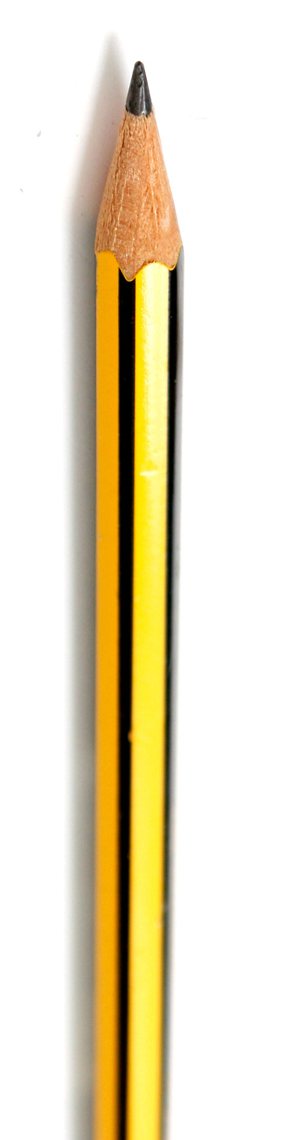
Ipencil - the complexity of a making a simple pencil


I stumbled upon a very interesting, classic essay: "I, Pencil: My Family Tree". The author, Leonard E- Read, traces the many steps that are necessary for manufacturing a pencil: Cutting wood, producing the saws to cut the wood, cooking the coffee to warm the loggers, mining the graphite, processing it, producing the lacquer, the label, the eraser and the metal holder of the rubber. It goes on and on - the point of course being to demonstrate how incredibly widely connected and interdependent an industrial process is.
As Read puts it: Simple? Yet, not a single person on the face of this earth knows how to make a pencil. It takes the cooperation and skills of thousands and thousands.
The essay was first published in 1958, and
since then the complexity has reached a whole different level. Think of an I-phone compared to a pencil. The phone is useless without being in ongoing connection to a network of communication, software, songs, news feeds - all of that. It's useless without regular charging from the electricity grid. Its value resides both in what producers have created, and in content created by the users that are connected through it. Read ends his essay arguing that the fact that so many people can come together without detailed instructions to make such a complex happen shows that we must leave men as free as possible to let the invisible hand work its magic. I would draw a different conclusion: The interconnection of everything and everybody is perhaps the most important trend shaping our future. it proves that we are increasingly interdependent. Our fate is common, we have shared interests. We should think less in terms of local, individual and short term gain - and more according to a planetary community. You could write a whole book about it - in fact, I did.

Tuesday, January 03, 2012

Same words, different meanings

Fascinating, how many of the core words that define our culture have very different meanings, depending on who you are.

We use words like growth, quality, community, democracy and creativity to describe our aspirations, but we hear different meanings behind the concepts.

You can describe very different realities with the exact same words.